 This article was written for Missouri Water lines, a semiannual publication for Missouri’s water and wastewater industry.
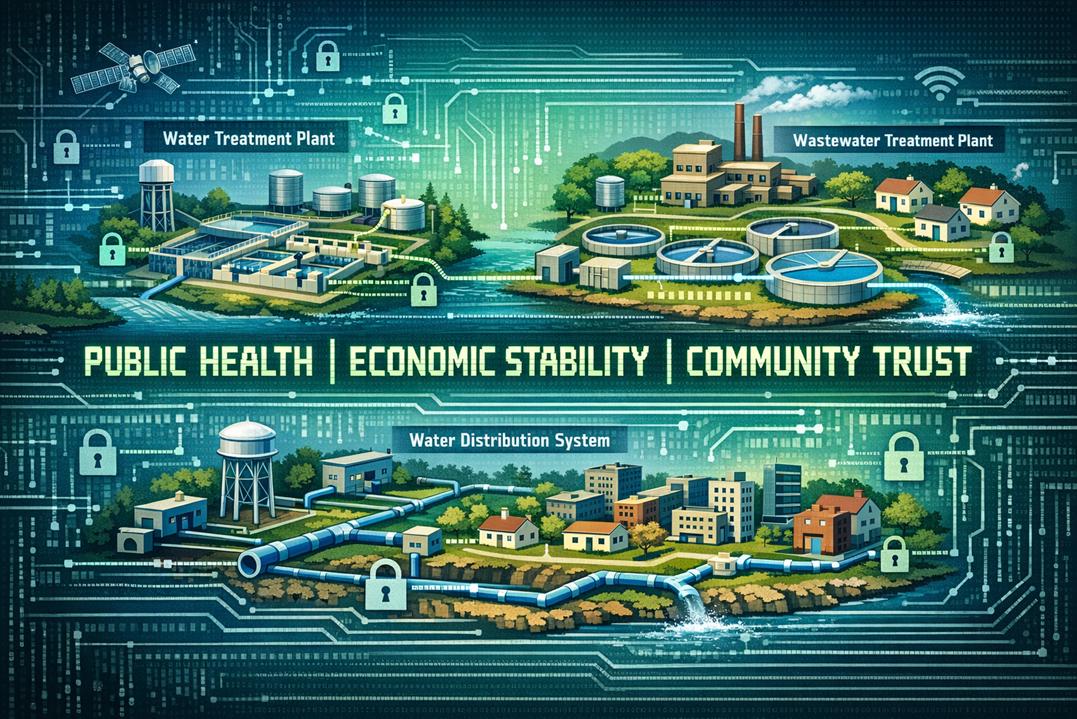
Every day, water and wastewater operators across Missouri carry out a mission that is essential to public health, economic stability, and community trust. Delivering safe and reliable water no longer depends solely on pipes, pumps, and treatment systems. Increasingly, it also depends on the resilience of digital systems that support everything from billing and communications to operational technology such as SCADA.
As connectivity grows, so do cyber risks. For many utilities, especially smaller systems serving fewer than 3,300 customers, the question is not whether cybersecurity matters, but how to address it in a practical and affordable way. Limited staff, tight budgets, and aging infrastructure make it difficult to adopt traditional approaches to cybersecurity.
The Cyber Readiness Institute (CRI) developed its Critical Infrastructure Program: Resiliency for Water Utilities specifically to meet this challenge. The program offers a free, accessible, and practical approach to cybersecurity that is designed for the realities of water utilities, particularly those operating with limited resources.
At its core, the program recognizes that cybersecurity does not need to be complex or expensive to be effective. Sponsored by Microsoft and based on CRI’s proven Cyber Readiness Program, the initiative provides a self-paced framework that utilities can complete in just a few weeks. It requires minimal technical expertise and is designed to fit alongside daily operational responsibilities rather than disrupt them.
What makes this program particularly valuable is its focus on people rather than technology alone. Many cyber incidents do not begin with sophisticated technical failures, but with simple human errors such as clicking on a phishing email or using weak passwords. CRI’s approach addresses this reality directly by promoting a culture in which every employee understands their role in protecting the organization. By improving everyday behaviors, utilities can significantly reduce their exposure to common threats.
The program is also designed to scale based on the size and maturity of each utility. For smaller systems serving fewer than 3,300 customers, it provides a clear path to establishing foundational practices. Participants learn how to document critical assets, develop a cyber incident response plan, and put basic policies in place. These are essential steps that many small utilities have not yet formalized but can implement quickly with the program’s guidance.
Utilities serving between 3,000 and 10,000 customers can use the program as a starting point for building more structured cyber readiness controls. As expectations evolve at the state and sector levels, these utilities can begin aligning their practices with emerging requirements while maintaining operational flexibility. For larger systems serving more than 10,000 customers, the program offers an opportunity to strengthen workforce training, update incident response plans, and refine policies to ensure consistency and resilience across the organization.
One of the most important aspects of the CRI program is its relevance to the unique environment of water utilities. Unlike many other sectors, water systems rely heavily on operational technology that directly controls physical processes such as treatment and distribution. These systems often coexist with traditional IT environments, creating additional complexity and risk.
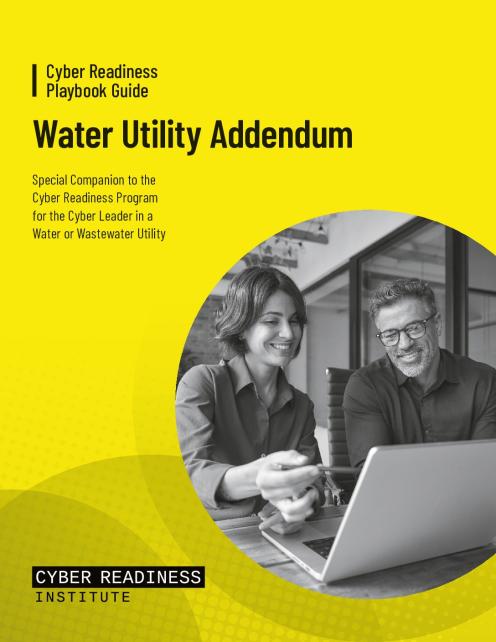
To address this, CRI developed a dedicated Water Utility Playbook Addendum. This resource provides targeted guidance to help utilities document and secure SCADA systems and manage remote access to operational technology. It also addresses the relationship between IT and OT systems, helping utilities reduce vulnerabilities that could damage both digital and physical operations. This tailored guidance ensures that participants are not simply applying generic cybersecurity advice, but are instead addressing the specific challenges of water infrastructure.
The program is built around a set of foundational practices known as the “Core Four.” These practices emphasize strong passwords and multi-factor authentication, regular software updates, phishing awareness, and secure data handling. While simple, these measures are highly effective. Decades of cybersecurity experience have shown that consistently applying these basic practices can prevent most common cyber incidents. By focusing on what works, the program enables utilities to make meaningful progress without becoming overwhelmed.
The effectiveness of this approach has already been demonstrated through a pilot program conducted in partnership with Microsoft and the Foundation for Defense of Democracies. Water and wastewater utilities that participated reported a significantly improved understanding of cybersecurity fundamentals, along with a stronger ability to prepare for and respond to incidents. These outcomes are especially important in environments where formal cybersecurity training has historically been limited.
A key factor in the pilot’s success was the designation of a “Cyber Leader” within each organization. This role does not require a background in cybersecurity. Instead, it empowers an existing staff member to take ownership of cyber readiness efforts, using the program’s tools and resources to guide implementation. In many cases, utilities also had access to CRI Certified Cyber Coaches, who provided hands-on support and helped translate training into practical policies and response plans. Utilities that engaged with coaches completed the program at significantly higher rates, demonstrating the value of mentorship and guided support.
Another important strength of the program is its accessibility. It is completely free, removing one of the most significant barriers faced by small and resource constrained utilities. For many organizations, hiring outside consultants or investing in specialized cybersecurity solutions is simply not feasible. By providing high-quality training, templates, and tools at no cost, the CRI program ensures that even the smallest utilities can take meaningful steps toward resilience.
The importance of this type of training is gaining broader recognition across the sector. In New York State, the Department of Environmental Conservation has approved the Cyber Readiness Program for wastewater operator renewal credits. This means that operators can apply their participation in the program toward their recertification requirements by submitting a certificate or letter of completion. While this approval currently applies to New York, it reflects a growing understanding that cybersecurity is a critical component of professional readiness for water operators nationwide.
For Missouri’s water community, the message is clear. Cyber threats are evolving, and water infrastructure is an increasingly attractive target. However, the path to resilience does not require large budgets or advanced technical expertise. It starts with practical steps, informed employees, and a commitment to building a culture of cybersecurity. CRI’s Critical Infrastructure Program offers a proven, accessible way to take those steps. By participating, Missouri’s water and wastewater utilities can strengthen their operations, protect their communities, and contribute to the resilience of the state’s critical infrastructure.
Now is the time to move from awareness to action. Utilities are encouraged to identify a Cyber Leader within their organization and enroll in the free program. With just a few weeks of focused effort, they can begin developing policies, building incident response plans, and training their workforce to recognize and prevent cyber threats.
Sasha Pailet Koff is Managing Director of the Cyber Readiness Institute (CRI) and is Founder and President of consultancy, So Help Me Understand. Read the report: Water Utilities Need Cyber Support: Lesson from the Cyber Readiness Institute’s Pilot Project. Explore the free Cyber Readiness Program.
